Underwriting, Advisory to Dominate JPMorgan’s Portfolio in Nigeria

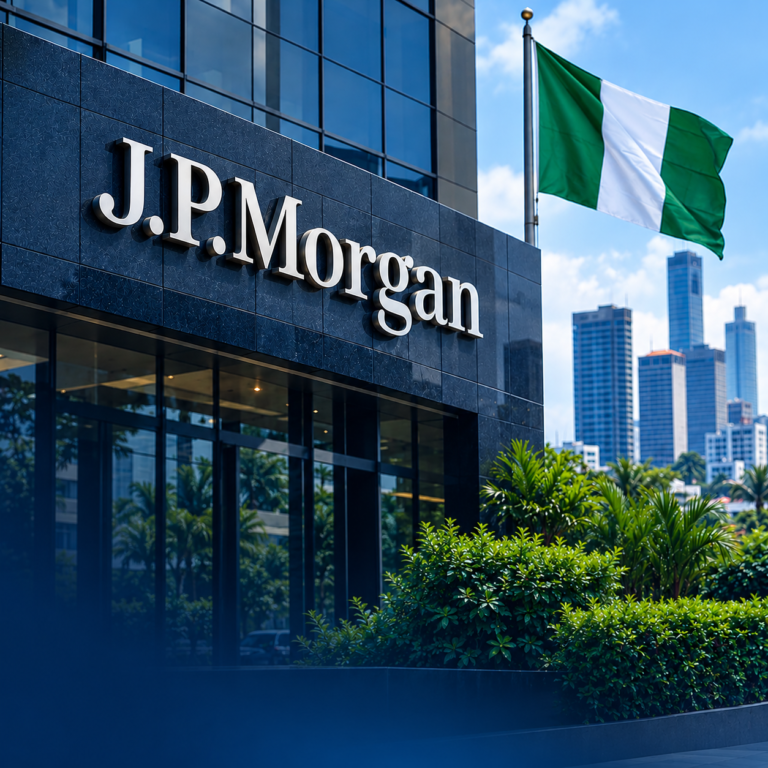
A fresh context to the proposed entry of JP Morgan Chase & Co (JPMorgan) into the Nigerian financial service market is emerging with investment banking and underwriting likely to serve as anchors of operations.
Myreapmoney gathered during a series of interactions with top investment bankers during the weekend that JPMorgan may have been encouraged to set up in Nigeria by the outcomes of the recent economic reform program of the current administration, particularly regarding the growth in the stock market and foreign reserves.
The All-Share Index of the Nigerian Exchange Group (NGX) has grown by over 370% from 52,973 in May 2023 when the Tinubu Administration came into office to 247,539.73 by close of business Friday.

Equity Market Capitalisation has also risen by 463% from N28.5 trillion ($21.5 billion) to N132.2 trillion within the same price. Equity price has been largely driven by rise in stock prices across the NGX while the recent capital issues by banks resulting from the banking sector recapitalization exercise boosted the Exchange’s market capitalization.
In the same vein, the nation’s gross foreign reserves has grown by about 58% from $35.1 billion to $55.1 billion over the same period.
Analysts believe that JP Morgan’s decision to set up a merchant banking operation in Nigeria is inspired by an optimistic outlook of the continuation of the reforms and a further increase in investment drive as local and foreign businesses seek to take advantage of the emerging opportunities.
According to Nigerian Investment Promotion Commission (NIPC), the government agency responsible for driving investment into Nigeria, the country has $14 billion in annual infrastructure financing gap and a cumulative investment deficit of over $100 billion. Critical sectors requiring investment include food system, transportation, telecommunications, infrastructure etc.
Analysts further pointed out that JPMorgan’s massive balance sheet will prove very crucial to provide support buffers for capital raise activities such as underwriting, project syndication, guarantees and trade finance.
Jamie Dimon, JP Morgan’s boss, has always prided his bank as having a “fortress balance sheet” with over $5 trillion in total assets and $372 billion in shareholders’ funds. The American banking giant is one of the largest investment bank and investment and underwriter in the world commanding almost 9% of the market share.
Over the years, Nigerian businesses have largely been financed through loans granted by commercial banks, over 75% of which have tenors of less than 3 years. Most of these loans are also denominated in local currency, a situation which has made capital formation extremely tight for indigenous businesses.
Foreign currency financing, especially for long-term projects, has been a challenge for businesses as low exports continue to hamper receivables in dollars and other major currencies. The entry of JPMorgan, alongside recent developments like the reclassification of Nigeria from Unclassified to Frontier Market status by FTSE Russell, the improved credit ratings by global organizations are expected to encourage boom in capital market activities in the years ahead as more companies seek long term funds for their projects. Zenith Bank, Access Bank, United Bank for Africa (UBA) and Access Bank are among the Nigerian banks currently using JP Morgan as correspondent bank. Apart from JPMorgan, Citigroup is the which other American financial institutions currently operating in Nigeria.