Aliko Dangote is richer than everybody in Britain
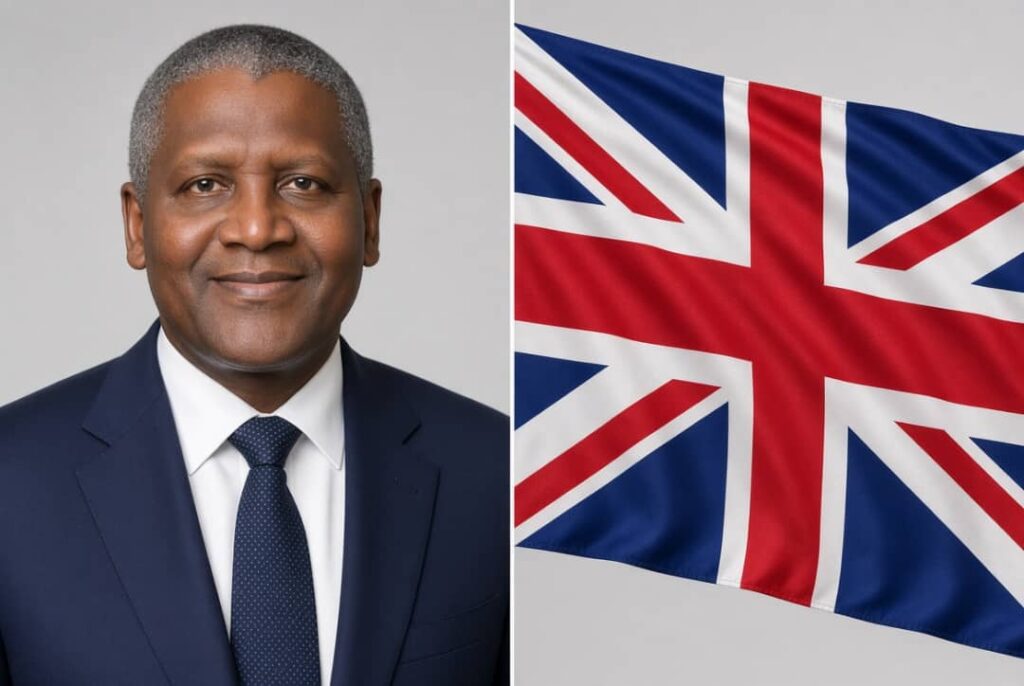
With a net-worth of $51 billion, Aliko Dangote is richer than everybody else in the United Kingdom.
Mr. Dangote, whose business interests span cement manufacturing, sugar processing, fertilizer production and crude oil refining is the richest African in recorded history. His wealth largely emanates from providing essential items to citizens of Nigeria, his home country and some other African countries.
Dangote’s wealth underscores the opportunities in a country with huge population and significant investment and production gap.

According to Forbes ranking, the richest person in the United Kingdom is 58-year-old Michael Platt, a hedge fund manager with an estimated net-worth of about $21 billion as per Forbes 2026 ranking. He is followed by Nik Storonsky, a technology entrepreneur with an estimated net-worth of about $19 billion and Jim Ratcliffe, a chemical engineer and businessman with a net-worth of about $18 billion.
Although Britain has about 55 billionaires on the current Forbes list compared to just four in Nigeria, none of the British billionaires has the level of fortune of Mr. Dangote whose wealth is even expected to double in the next few years with the expansion in the operating capacity of its recently listed company, Dangote Refineries and the listing of Dangote Fertilizers.
Britain has a nominal Gross Domestic Product (GDP) of over $4 trillion, almost ten times that of Nigeria’s $386 billion, according to International Monetary Fund (IMF)/World Bank data.
The four Nigerians on the Forbes List (Dangote, Abdulsamad Rabiu, Mike Adenuga and Femi Otedola) have a combined net-worth of about $80 billion, almost double their combined net-worth, over two years ago. The growth was large due to the spike in the Nigerian Exchange Group (NGX) where many of their major companies are listed.
The combined net-worth of Nigeria’s Forbes four billionaires could be up to 25% of the nation’s GDP. The four richest British billionaires own less than 2% of the country’s GDP. This sharp contrast fundamentally explains the level of inequality in wealth distribution in both countries and the depth of poverty of Nigeria as a nation.
Per capita income explains both issues. At a per capital income of about $1,500 at market exchange rate (purchasing power parity, otherwise known as PPP, is about $9,500), Nigeria lags Britain (with market exchange rate GDP of about $60,000) by over sixty times less. The market exchange rate measure is generally more useful for a country like Nigeria that virtually imports everything and produces nothing.
The wealth gap between the average British resident and her Nigerian counterpart speaks to the absence of a virile production base in a country (Nigeria) that virtually sells nothing apart from low value commodities like crude oil, cashew and cocoa to the rest of the world.
Though Britain has fallen behind in manufacturing heft in recent decades, losing its heft to China and some other Asian countries, it is still a major financial service hub hosting of the biggest banks, insurance companies and hedge funds in the world. London ranks next to New York in financial service activities while major global business superpowers such as Unilever, Royal Dutch Shell, British Petroleum and Barclays Bank have British origin.
The wealth gap between the nation’s Forbes’ billionaires club and the rest of the citizens also highlights the stark inequality gap between the rich and the residents of a country whose over 60% of the population live below the poverty line.