

An IPO Sold Like Cement, Sugar and Salt
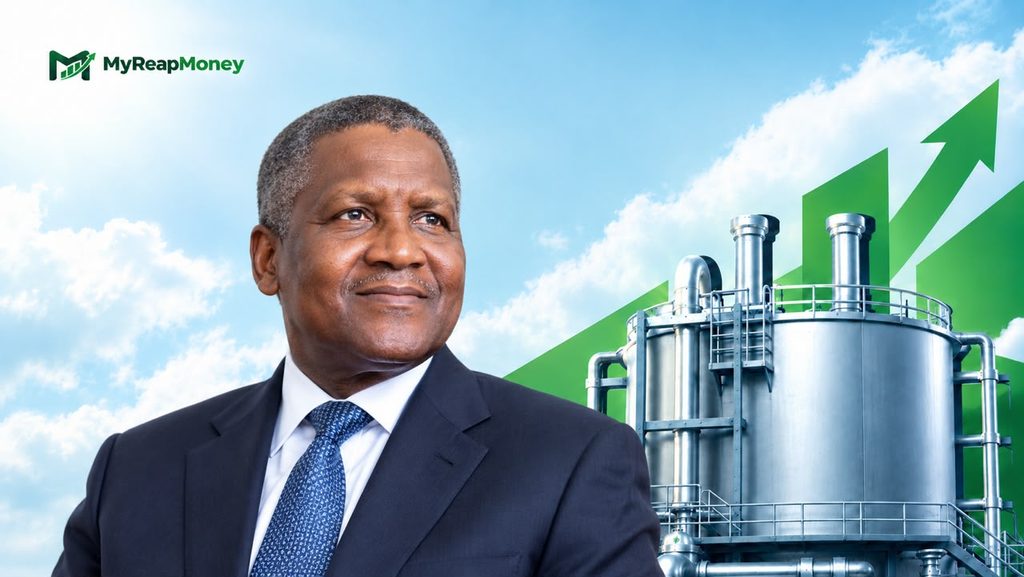
Public Offers are the stuff of investment bankers and stockbrokers. The company issuing the offer, otherwise known as the issuer in investment banking parlance, most times stay in the background and allow the capital market technicians to talk to their various communities. In a manner of speaking, the issuer says, “just bring me the money”
The Dangote Initial Public Offer was different. It wasn’t the first time a Dangote company was meeting the investing public. As far back as 2006/2007, Dangote took three companies to the capital market to raise over N50 billion. Big money in those days. In Nigeria today, everything Dangote does is a national project, a call to the grit and never-say-die-spirit of the Nigerian. Aliko Dangote is now what it means to do it right.
If his touch as a genius was suspect, the Initial Public Offer (IPO) of his refinery cleared all doubts. The IPO started long before the public was even formally invited to the party. The Public Offer opened over 15 years ago when the idea of 650,000 barrels per day became public. State governments, the CBN, NNPC, the media, diplomats, bankers and all those in search of an idea for livelihood jumped into the bandwagon. Dangote has the buzz of a newsmaker, and he applied the skill to maximum effects. Dangote Refineries became Nigeria’s solution to its economic woes. Godwin Emefiele, the former CBN Governor, said the refineries would cut FX export utilization by almost half and so it deserved all monetary policy support. Well…….

So, when the IPO was finally berthed on September 14th, it came in the mode of a National Savings Certificate. It had the flavour of welfare; it was a palliative IPO. Subscription minimum of 10 units. At N525, that would N5,250 in investment. More like selling sachets of sugar and salt. And students would even buy one and get one free. An IPO with a promo.
Alhaji Aliko Dangote had always been a public man, more known for his wealth than any other person of black colour still breathing today. But this public offer brought him out in a different clime: his face showing on screen and platforms as the poor man’s saviour, the messenger sent to save the African downtrodden from the scourge of penury and want.
Dangote killed it beyond measures. 124 countries across the world, all 54 African countries, all seven continents and possibly over ten million investors. All coming together to raise over $2.1 billion dollars for a business located in a country many of them may never visit. Dangote did more than sell shares. Through the IPO, he sold Nigeria and indeed Africa as a business and as an opportunity. I have inside information that suggests that the decision of JPMorgan to play in the Nigerian banking space is not unconnected with the breadth and scope of Dangote Refineries.
As someone who has been around finance and strategy for the better part of my professional life, I have a fair understanding of the dynamics of investment. Capital market instruments are a lot more technical than plain vanilla banking products Communicating its benefits to the public can be quite tedious and challenging. But Dangote broke it down and made it simple. It became so simple it was something every market woman just wanted to have, if for nothing, to bequeath to coming grandchildren and great grandchildren if a Banana Island mansion is not possible. My vendor called me to seek guidance on how he was going to submit his application form. When I asked him how much he was going to buy, he said 50 units. That was less than N30,000 worth of shares.
“What will that change in your life, Tunde”, I asked him.
“They said the shares would be times ten by next year”, he replied.
They said. Who said, I don’t know. But Tunde, who told me had never bought shares in his life, just believed his time to break through had come. Somehow. Just buy Dangote shares and you are on the way. What Tunde heard was probably the message many people heard, maybe subconsciously. Politicians, ever opportunistic, jumped on the Dangote train to stump on promises never to be fulfilled. Dangote shares became the usual election rice and sugar. State governors reworked their welfare and compensation package. For the first time, IPOs became part of pension and gratuity schemes for teachers and civil servants.
Dangote may have the wealthiest man ever to be born Nigerian. He may have been the only one to solely undertake the biggest non-governmental project in Africa. But through this IPO, he is also coming across as the greatest marketer this country has ever known. He created what the Yorubas will call “Gbanjo” out of a share sale, turning a hitherto affair conducted in the comfy offices of investment bankers and stockbrokers into a retail grassroots market: affordable, essential and particularly made for the poor. He demystified the buzz around “oil and gas” and made petrol just what it was, just petrol.
So, as he approaches the age of seventy, I will ask Alhaji to think of his legacy beyond petrol, fertilizer, sugar and cement. I even understand power and steel are also on the table. Beyond the refineries, the processing plants, the factories, the trucks and the billions (dollars), there is the salesmanship. That’s Dangote’s hidden wealth, the wealth a Forbes ranking many never capture. The over $50 billion we see is not just minted in those factories, they are produced when the ideation, execution and salesmanship of Alhaji interface to sell a personal business product as a national and humanitarian ideology, to all stakeholders. By spreading 5% stakes across 10 million portfolios, Dangote now has the bragging right as a creator of a national asset. Dangote Refineries has just become as important as NNPC. Billions in pensions, gratuities, savings, insurance premiums, students’ allowances, housewives’ allowances, politicians’ palliatives are now involved.
Dangote may not have earned more than a first degree. But he knows enough to qualify for a visiting professorship in Harvard or Sloan. His methodology should be a stuff of textbooks, classrooms and internships. That will be probably a greater legacy than a foundation of several billions.
