
Naira Weakens to ₦1,350.86/$ as Dollar Demand Puts Fresh Pressure on Nigerian Businesses
By MyReapMoney Business Desk
LAGOS, November 11, 2026: Nigeria’s foreign exchange market is facing renewed pressure as the naira weakened against the US dollar, raising fresh concerns about the cost of doing business, international payments and imported goods.
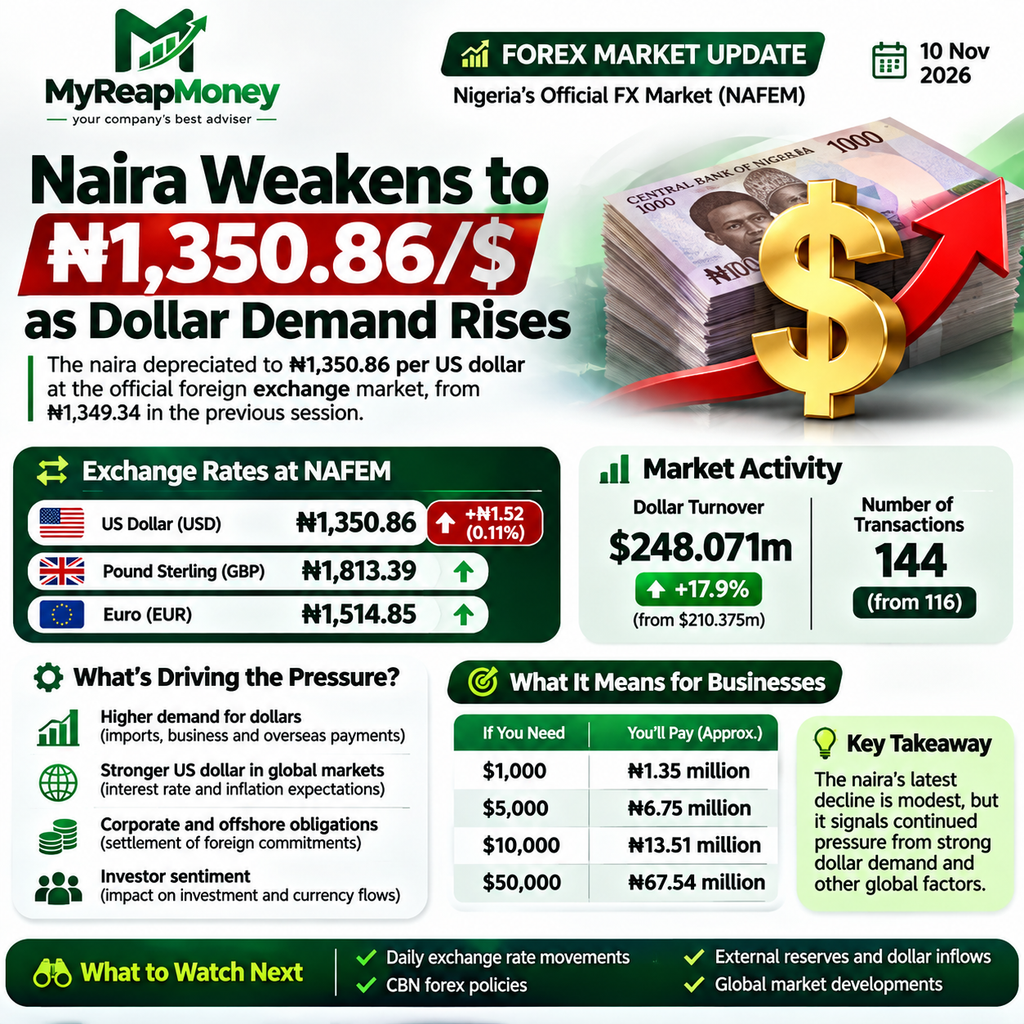
The naira depreciated to ₦1,350.86 per dollar at the Nigerian Autonomous Foreign Exchange Market (NAFEM) on Tuesday, November 10, compared with ₦1,349.34 recorded in the previous trading session.

The movement represents a loss of approximately ₦1.52 against the dollar, or 0.11 per cent.
Although the decline appears modest, the development comes at a time when Nigerian businesses remain sensitive to exchange-rate movements, particularly companies that depend on imported raw materials, machinery, technology and foreign services.
Dollar Trading Activity Rises as Demand Persists
Data from the foreign exchange market showed that interbank dollar turnover increased by 17.9 per cent to $248.071 million on Tuesday, compared with $210.375 million recorded on Monday.
The number of foreign exchange transactions also increased from 116 to 144.
Despite the higher trading activity, the naira still recorded a marginal decline, highlighting the importance of balancing dollar demand with available foreign exchange supply.
Business Post Nigeria reported that the currency also weakened against other major international currencies.
The pound sterling appreciated to ₦1,813.39, while the euro rose to ₦1,514.85 during the session.
What Is Driving the Pressure on the Naira?
Several factors are contributing to the latest movement.
1. Seasonal demand for foreign exchangeBusinesses and individuals continue to require dollars for international transactions, import payments and other foreign obligations. Increased demand can put pressure on the local currency when available supply does not rise at the same pace.
2. International dollar strengthDevelopments in the United States financial market are also influencing currency movements. Expectations surrounding US interest rates and inflation can affect global investment flows and demand for the dollar.
3. Corporate and offshore obligationsCompanies with international financial commitments require foreign currency to settle payments. These obligations can increase demand in the official foreign exchange market.
4. Investor sentimentForeign investors monitor exchange-rate stability when making decisions about investing in Nigeria. Expectations of further depreciation can influence their investment and currency-conversion decisions.
How Much Could This Cost Nigerian Businesses?
The impact of exchange-rate movements becomes clearer when translated into actual business transactions.
$1,000 is approximately ₦1.35 million.
Using the latest reported official market rate of ₦1,350.86 per dollar:
- $1,000 is approximately ₦1.35 million.
- $5,000 is approximately ₦6.75 million.
- $10,000 is approximately ₦13.51 million.
- $50,000 is approximately ₦67.54 million.
For an importer settling a $10,000 invoice, even a relatively small exchange-rate movement can increase the naira amount required for payment.
This is why manufacturers, distributors, technology companies and SMEs closely monitor developments in the foreign exchange market.
What Should Investors and Business Owners Watch?
The immediate question is whether the naira’s latest depreciation represents a temporary market adjustment or the beginning of sustained pressure.
Investors and business owners should pay attention to:
- Daily movements in the official exchange rate.
- Central Bank of Nigeria foreign exchange policies.
- Nigeria’s external reserves and foreign currency inflows.
- International crude oil prices and export earnings.
- Foreign portfolio investment and capital movements.
- Inflation and the cost of imported production inputs.
A single day’s depreciation does not establish a new currency trend. Sustained movements over several trading sessions will provide a clearer picture.
MyReapMoney Market Watch
Nigeria’s currency market remains one of the most important indicators for businesses and investors.
While the latest movement is relatively small, its significance lies in what it reveals about continuing foreign exchange demand and the sensitivity of the Nigerian economy to developments in international financial markets.
For SMEs, the priority should be effective foreign exchange planning, realistic pricing, cost management and avoiding unnecessary exposure to unhedged dollar obligations.
For investors, currency movements should be considered alongside corporate earnings, interest rates, inflation and broader economic fundamentals.
The bottom line: The naira has weakened again, but the bigger story is whether Nigeria can sustain sufficient foreign exchange supply to support businesses, attract investment and maintain currency stability.
Source: Nigerian foreign exchange market data as reported by Business Post Nigeria, November 11, 2026.