Food and Core Inflation Ease, but Rising Energy Costs Keep Pressure on Nigerian Businesses
MYREAPMONEY REPORT
Nigeria’s inflation indicators show signs of moderation, with food and core inflation recording monthly declines. However, rising energy costs and persistent household concerns suggest that the cost-of-living challenge remains far from over.
Nigeria’s inflation outlook is showing mixed signals, as easing food and core inflation offer some relief to households and businesses, while rising energy costs continue to threaten operating expenses.

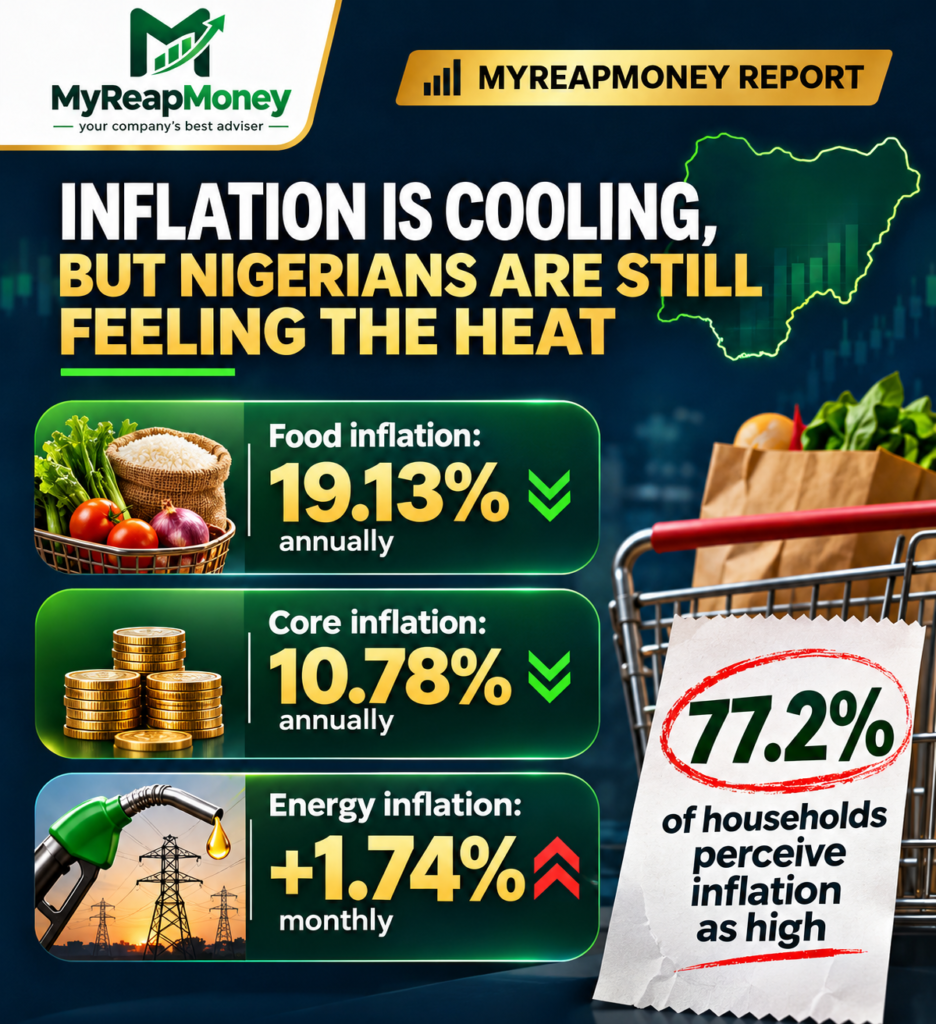
Available inflation figures show that food inflation declined to 19.13% year-on-year, while food prices recorded a 0.75% contraction month-on-month. This suggests some moderation in food price pressures, although the annual rate indicates that food costs remain significantly elevated.
Core inflation also declined to 10.78% annually, accompanied by a 0.53% month-on-month contraction. The moderation suggests easing price pressures across goods and services outside the food and energy components.
However, the improvement was not reflected across all inflation categories. The monthly energy inflation sub-index increased by 1.74%, highlighting continued cost pressures in the energy sector.
The geographical breakdown also revealed differences in inflation experiences across the country. Urban inflation stood at 14.84% year-on-year, compared with 12.17% in rural areas.
What the Figures Mean for Businesses
The moderation in annual food and core inflation could provide some relief for manufacturers, retailers and other businesses, particularly those facing pressure from rising input costs and declining consumer purchasing power.
For manufacturers, lower food and core inflation could gradually ease some cost pressures along supply chains. Retailers may also benefit if the moderation translates into improved consumer purchasing power and more stable demand.
However, the increase in monthly energy inflation presents a continuing challenge. Businesses that depend heavily on electricity, diesel and other energy sources may continue to face elevated operating costs, limiting the benefits of declining inflation in other categories.
Consequently, businesses should avoid assuming that lower annual inflation automatically means cheaper production, distribution and operating expenses.
Households Still Feel the Inflation Pressure
Despite the improving inflation indicators, household perceptions suggest that the financial burden remains significant.
The Central Bank of Nigeria’s September survey found that 77.2% of households perceived inflation as high.
This finding highlights the gap between national inflation statistics and the everyday experiences of Nigerians, many of whom continue to contend with expensive food, transportation, housing and other essential expenses.
While inflation moderation is a positive development, the impact on household finances will depend largely on whether prices become more stable and income growth begins to catch up with the cost of living.
Outlook: Is Inflation Relief Reaching the Economy?
The latest figures point to gradual improvement in some inflation components, but the rise in energy inflation and persistent household concerns indicate that economic pressures remain.
For businesses, the immediate priority should be effective cost management, careful pricing decisions and improved operational efficiency.
For policymakers, sustaining the moderation in inflation will require measures that address energy costs, food supply constraints, transportation expenses and broader structural challenges affecting production.
Ultimately, the real test of declining inflation will not be the improvement in statistical indicators alone, but whether households can afford more and businesses can operate at lower costs.