

Nigeria’s ECO Push Raises a Bigger Question: Should Economic Weight Translate Into Monetary Power?
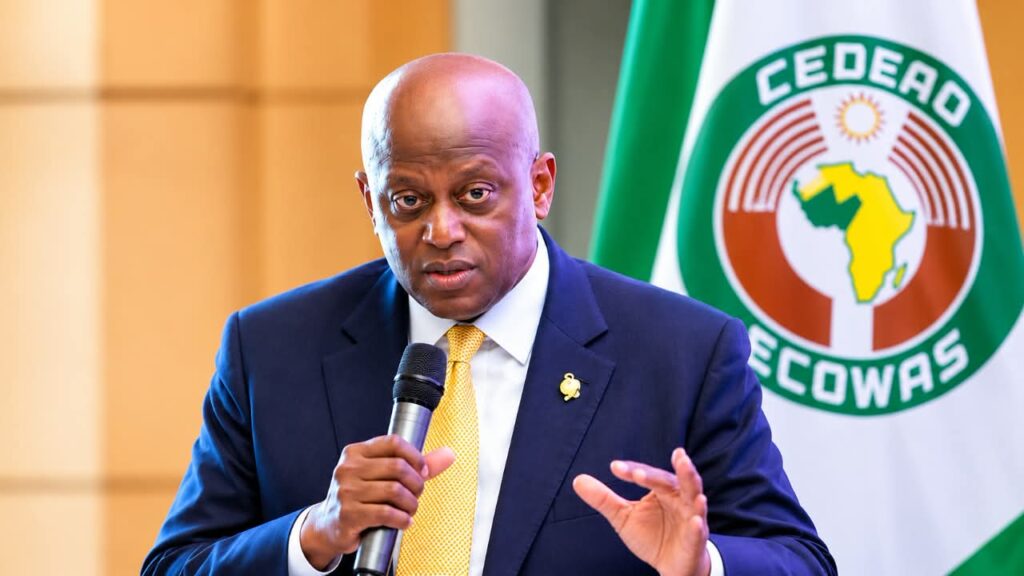
Nigeria’s call for greater influence in the governance of the proposed ECOWAS single currency is exposing a fundamental design question for West Africa’s monetary integration: how should a regional union balance the sovereign equality of its members against the unequal economic responsibilities they may carry?
Central Bank of Nigeria (CBN) Governor Olayemi Cardoso made the case on November 20 in Abidjan, Côte d’Ivoire, at the ministerial session of the sixth Presidential Task Force Meeting on the ECOWAS Single Currency Programme. He argued that countries committing greater financial resources, reserves, institutional support and risk should receive meaningful consideration in the union’s decision-making structure.
The argument is not simply about Nigeria securing a larger seat at the table. It goes to the long-term legitimacy of a monetary union: governments must be able to explain what they contribute, what risks they assume and how decisions affecting those commitments are made.

The economic gap behind the governance debate
The scale of the economies involved helps explain why the question is sensitive. World Bank data for 2025 places Nigeria’s nominal GDP at approximately $290.8 billion. Côte d’Ivoire, another major economy in the region, recorded about $99.8 billion, while Ghana was at $114.2 billion and Senegal at $37.0 billion.
On that measure, Nigeria’s economy was nearly three times Côte d’Ivoire’s and about 2.5 times Ghana’s. GDP is not a direct measure of how much each country will pay into the monetary union, nor does it determine voting rights; it does illustrate the uneven economic scale across the region.
Nigeria says it will commit substantial financial resources, reserves and institutional capital to the proposed union. Cardoso has argued that the scale of those responsibilities should be reflected in representation, particularly when governments must defend their commitments before their parliaments and citizens. No specific Nigeria contribution amount was identified in the public material reviewed for this report.
Equal membership versus weighted influence
The position creates a policy trade-off. A governance system built strictly around equal representation protects smaller countries from being overshadowed by the region’s largest economy. But a system that ignores financial exposure and systemic importance could make larger contributors question whether the arrangement is accountable and sustainable.
Nigeria’s proposal puts that balance into the negotiating room. Cardoso has said the country is not seeking dominance, but wants responsibility, accountability and participation to be aligned. The unresolved issue is what that balance would look like in practice—whether through voting arrangements, leadership appointments, institutional locations or other governance safeguards. The public statements reviewed do not establish a final formula.
The ECO’s launch timetable is a target, not a done deal
ECOWAS has continued to target 2027 for the proposed ECO, with a phased approach tied to
member countries’ readiness and macroeconomic convergence requirements. In a September 2026 update, the ECOWAS Convergence Council said the 2027 objective remained achievable and called for the Presidential Task Force process to be accelerated.
That makes the governance negotiations more than administrative housekeeping. The location of institutions, leadership selection and allocation of authority could shape the union’s credibility with investors and member governments, and influence whether participating countries remain willing to support the project over time.
Why the governance question may matter as much as the currency
A shared currency would not automatically erase differences in inflation, fiscal conditions, economic structure or policy priorities among member states. The ECO’s durability would depend on how the union handles those differences, establishes credible institutions and maintains trust among countries with unequal economic weight.
Nigeria’s intervention therefore shifts attention from the symbolism of launching a common currency to the institutional bargain beneath it. West Africa may be able to agree on the ambition of a single currency; the harder task is agreeing on how power, risk and responsibility will be shared once it exists.
KEY FIGURES | 2025 GDP (CURRENT US$)
| Country | Nominal GDP |
| Nigeria | $290.8 billion |
| Ghana | $114.2 billion |
| Côte d’Ivoire | $99.8 billion |
| Senegal | $37.0 billion |
Editorial note: GDP figures provide context for economic scale only. They are not figures for assessed contributions, reserves pledged or voting weights in the proposed ECO.
Source:
CBN Governor’s intervention / contemporary reporting (Nov. 20–23, 2026): https://realnewsmagazine.net/ecowas-monetary-union-cardoso-advocates-equity-fairness-in-governance-structure/
